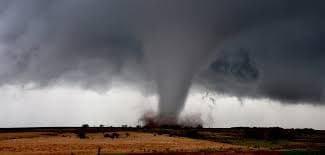
Tornadoes
Nature's Most Violent Weather Phenomenon
Rotation
Violently rotating column of air extending from thunderstorm to ground
Wind Speed
65 to 200+ mph depending on EF scale rating
Extreme Danger
Most violent storms - instant devastation in path
What is a Tornado?
A tornado is a violently rotating column of air extending from a cumulonimbus cloud to the ground. With wind speeds exceeding 200 mph in the strongest tornadoes, they are the most violent of all atmospheric phenomena. Most tornadoes occur in supercell thunderstorms, though weaker tornadoes can form in other storm types.
Formation and Development
Mesocyclone Formation
Rotating updraft forms at mid-levels of supercell. Wind shear tilts vertical rotation into horizontal, then lifts it to vertical again.
Tornadogenesis
Rotation descends from cloud base. Wall cloud forms and tightens. Funnel cloud appears. Tornado occurs when it touches ground.
Dissipation
Tornado weakens as circulation tightens and storm structure changes. Most tornadoes last 5-30 minutes total.
EF Scale Classification
EF0: Weak (65-85 mph)
Damage: Roof surfaces, trees snapped, mobile homes pushed off foundation
EF1: Moderate (86-110 mph)
Damage: Windows broken, roofs severely stripped, mobile homes overturned, moving vehicles blown off road
EF2: Significant (111-135 mph)
Damage: Roofs torn off, walls collapsed, trees snapped/debarked, light objects become missiles
EF3: Severe (136-165 mph)
Damage: Most trees debarked, heavy vehicles lifted off ground, structures severely damaged
EF4: Violent (166-200 mph)
Damage: Well-constructed houses completely leveled, steel-framed buildings mangled
EF5: Extreme (200+ mph)
Damage: Total devastation, steel structures twisted, grass stripped from ground (1% of tornadoes)
Tornado Types and Origins
Supercell Tornadoes
Most dangerous. Develop from rotating supercells with strong mesocyclones. Often long-lived with strong rotation.
Account for most violent tornadoes (EF3-EF5)
Non-Supercell Tornadoes
Develop from multi-cell clusters or squall lines. Generally weaker but can be violent.
Include landspout and gustnado variations
Waterspouts
Tornadoes over water. Usually weaker but can become dangerous if moving onshore.
Form from warm water and unstable atmosphere
Anticyclonic Tornadoes
Rotate opposite to primary tornado. Often weaker and shorter-lived.
Occur alongside strong supercell tornadoes
Geographic and Seasonal Patterns
Tornado Alley
Oklahoma, Kansas, Nebraska, Texas experience most tornadoes due to geographic positioning for supercell formation.
- • Oklahoma: ~56 per year
- • Kansas: ~50 per year
- • Texas: ~150+ per year total
Peak Season
Most US tornadoes occur April-June when cool dry air aloft meets warm moist air below.
- • April: Spring storm peak
- • May: Peak tornado month
- • June: Secondary peak
Hazards and Damage
Wind Damage
Extreme winds (65-200+ mph) demolish structures, snap trees, and lift vehicles.
- • Complete home destruction
- • Multi-story buildings leveled
- • Vehicles become projectiles
- • Path width: 10 yards to 2+ miles
Flying Debris
Most tornado injuries from flying debris - wood, metal, glass becomes deadly projectiles.
- • Debris clouds impenetrable
- • 2x4 boards piercing trees
- • Windows shattered instantly
- • Most fatalities from debris impact
Low Pressure Effects
Rapid pressure drop can cause explosive damage to buildings.
- • Roof explosions outward
- • Windows implode
- • Internal pressure imbalance
- • Structural failure cascade
Casualties
60-80 tornado deaths annually in US, thousands injured.
- • Strong tornadoes most deadly
- • Mobile homes most vulnerable
- • Early warnings critical
- • Underground shelters safest
Detection and Warnings
Radar Detection
- • Velocity couplets
- • Hook echo shape
- • Rapid rotation increase
- • Debris aloft indicator
- • Confirms tornado ongoing
- • High reflectivity from debris
- • Tornado Warning: Immediate
- • Tornado Watch: Hours ahead
- • Lead time: 5-15 minutes
Safety During Tornadoes
Immediate Action - Tornado Warning
- 1. Go to basement IMMEDIATELY if available
- 2. Small interior room on lowest floor if no basement
- 3. Away from windows and exterior walls
- 4. Cover yourself with mattress, blankets, helmet
- 5. Stay put until all-clear given
Preparation and Readiness
- ✓ Know your shelter location in advance
- ✓ Practice tornado drills
- ✓ Keep emergency supplies ready
- ✓ Have multiple alert methods
- ✓ Know difference between Watch/Warning
- ✓ Monitor weather closely in spring
- ✓ Secure mobile home or evacuate
Key Facts
- 1,200+ tornadoes annually in US
- Peak month: May
- Peak time: 3-9 PM
- Average path: 7 miles long
- Average width: 400 yards
- Average duration: 10-20 minutes
- Fastest forward speed: 70 mph
- Strongest: EF5 exceeds 200 mph
- 60-80 deaths annually
- 1000+ injuries annually